
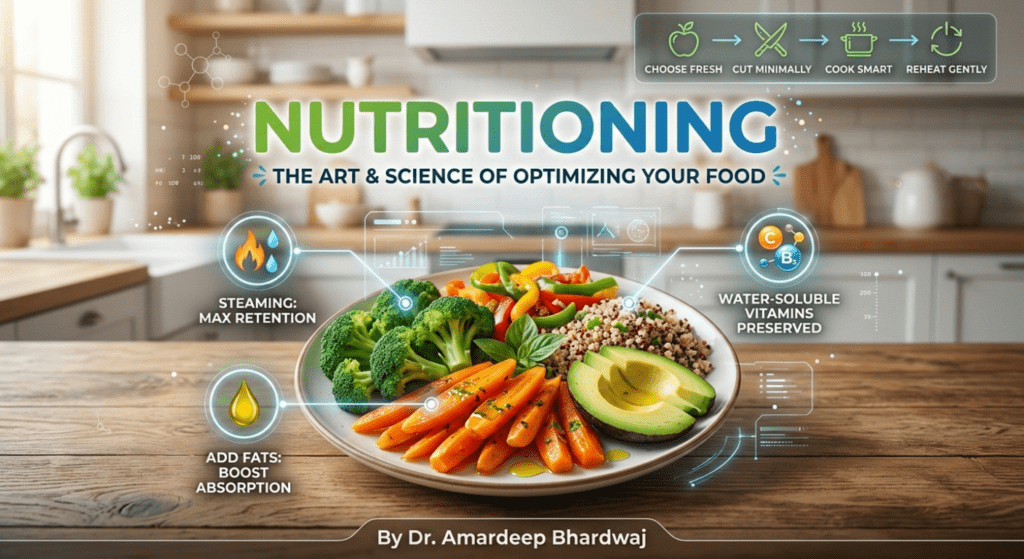
The Art & Science of ‘Nutritioning’
Allow me to introduce a spanking new word into your vocabulary- Nutritioning.
Yes, I coined it myself, not merely for the heck of it but to help all my friends around
the world to develop a more healthy, scientific and informed understanding, and
attitude, towards food. Simply put, it includes ‘anything and everything’ involved in
obtaining nutrition from what we humans eat and drink. What is somewhat
surprising is that while the sciences around nutrition have evolved significantly in
the last few decades, we still have no one single, wholesome word to collectively
encapsulate all the wisdom and insights that they provide. Nutritoning fits the bill
perfectly, and concisely, since it includes all the healthy takeaways from this rich
reservoir of nutrition-wisdom, no matter from which part of the world, culture or field
of science it comes from. It simply tells us “do this” or “don’t do this” so as to
optimize the nutrition that we derive from what we ingest.
Right from the time when the first human, let’s call him Adam just because
everyone else seems to do so, chomped on that proverbial apple, mankind has
endeavored to understand and improve the nutrition it derives from all that it
chomps on. People from different cultures and geographies around of the world
have, over many centuries, accumulated great insight and knowledge about how to
derive from food what we want, what we need and what is good for us, also how to
avoid ingesting the wrong ingredients. Today, modern science is further refining this
age-old wisdom, and adding fresh new insights; all of which put together
fundamentally changes the ways in which we have been traditionally selecting,
cooking, preparing, eating and absorbing our food. Let us see how we can gainfully
use the art and science of Nutritoning to derive substantially greater nutrition from
the food that we eat.
Cooking
Cooking is essential for making raw food edible and digestible by the human
digestive system. Besides, it ensures that the food we eat is safe and tasty. But it
also alters the nutrient content of what we eat. Vitamins and minerals easily
degrade or leach out during preparation, while proteins, fats, and carbohydrates are
relatively more stable. Among micronutrients, water-soluble vitamins (like Vitamins
B and C) are the most sensitive: they break down at high heat and dissolve in
cooking water. Fat-soluble vitamins (A, D, E, K) and minerals are more heat-stable,
though some minerals can still leach into water. Proper techniques can minimize
nutrient loss. For example, steaming or microwaving vegetables keeps more
vitamins intact than boiling. Being mindful about cutting, temperature, and time is
key to preserving nutrients at home. Before we get into practical tips to cook and
store food for maximum nutritional value, let us first try and understand how and
why nutrients are lost, and how to minimize this loss.
How Nutrients are Lost
Nutrients can be lost through heating, dissolution in water, oxidation and length of
exposure time. The interior of a vegetable is naturally protected from light, air,
water, etc by its peel or skin; once cut or peeled, antioxidant vitamins (C, A, E) are
exposed to oxygen and begin to degrade. Heat breaks down delicate compounds:
Vitamin C and some B vitamins are partially destroyed at high temperatures. Water
is another culprit: boiling or simmering can leach water-soluble vitamins and
minerals into the cooking liquid. For instance, one study found that cooking in water
caused vitamin C losses about ten times higher than cooking without water. In
contrast, fat-soluble vitamins and minerals typically remain in the food unless
dissolved in water or destroyed by very high heat.
Carbohydrates and proteins are generally more stable. Cooking denatures protein
(unfolding it) but doesn’t “destroy” it; in fact, gentle cooking can make proteins
easier to digest. However, extremely high heat (deep-frying) can sharply reduce the
quantum of some amino acids in food. Fats are heat-stable up to their smoke point,
but polyunsaturated fats (like Omega-3s) can oxidize and lose nutritive ingredients
when overheated. Fiber largely survives cooking, though very long cooking can
soften fiber and leach some soluble fiber into water. Overall, the biggest nutrient
losses are for water-soluble vitamins and some phytonutrients, especially under
prolonged cooking or when using large amounts of water.
Cooking Methods for Nutrient Retention
The choice of cooking methods makes a huge difference in nutrient retention. In
general, shorter cooking at moderate temperatures with minimal water preserves
the most nutrients. Below are common methods ranked roughly from gentle to
harsher:
- Steaming: Considered one of the best ways to preserve nutrients.
Steaming cooks vegetables with indirect heat, so the food isn’t submerged in
water. The British Nutrition Foundation notes that steaming (or microwaving
with little water) often retains water-soluble vitamins better than boiling. In
fact, experts conclude that steaming is the best method for vegetable
nutrition, since it avoids nutrient leaching and excessive heat. (Use a tightly
fitting lid or steamer basket to trap steam and cook quickly.) Steaming
vegetables (rather than boiling) helps keep vitamins from leaching out.
Because the veggies never contact excess water, most vitamin C and B
vitamins stay in the food. - Microwaving: Microwave cooking is second best. Quick and convenient, it is
also gentle on nutrients. It heats food quickly from the inside out, greatly
reducing cooking time. Harvard Health notes that shorter cook times mean
fewer nutrients break down. In tests, microwaving vegetables resulted in
less vitamin loss than longer methods: boiled greens lost more vitamin C than
those microwaved. A Korean study found Vitamin C retention up to 91% in
microwaved veggies, versus virtually 0% after boiling. Microwaving (especially
with a bit of water or steam) is typically as good as steaming in nutrient
retention. - Pressure-Cooking: Modern pressure cookers (and Instant Pots) cook foods
quickly under high steam pressure. This can actually improve nutrient retention
compared to boiling. Dr. Greger’s review of relevant literature found that
pressure-cooked foods often retain more nutrients than traditional boiling
(because cooking time is so much shorter). For example, cruciferous
vegetables lost about 75% of their cancer-fighting compounds when boiled,
but under 50% when pressure cooked. Beans pressure-cooked quickly had six
times the antioxidant level of beans boiled for an hour. The takeaway: if you
have a pressure cooker, use it. It locks-in nutrients by cutting down the
overall cooking time, thus preserving nutrients. - Sautéing and Stir-Frying: Cooking in a small amount of oil over medium-high
heat can preserve many nutrients, especially because cooking times are short.
Healthline notes that “cooking for a short time without water helps prevent
the loss of B vitamins,” and adding a bit of fat can boost absorption of
fat-soluble vitamins. For example, tossing carrots or spinach quickly in oil will
soften them and actually make carotenoids and other antioxidants more
available. Just be mindful of smoke points: do not overheat the oil, as
extremely high heat can break down unsaturated fats and some vitamins. - Roasting and Baking: Dry-heat often causes minimal nutrient losses for
most foods. Healthline observes that “most vitamin losses are minimal” when
roasting or baking, including Vitamin C. The main drawback however, is the
overall time taken to cook since longer cooking times mean lesser nutrient
retention in the food. Prolonged roasting at high heat can degrade B
vitamins in meats (one study saw up to a 40% drop). When roasting
vegetables, keep an eye on time; shorter roasting (or even roasting at a
moderate temperature) will better preserve nutrients while still creating flavor. - Frying (Deep-Frying): Frying coats food in oil prevents leaching of water-
soluble nutrients but involves very high temperatures. This can destroysome heat-sensitive nutrients and can oxidize delicate fats. For instance,
frying carrots or kale led to losses of carotenoids (nutrients like beta-
carotene) in one study. It can also degrade Omega-3 fats, so crisp frying of
fatty fish often destroys some Omega-3 content. If you fry, use a healthy oil
(e.g. avocado or canola) and don’t reuse more than twice, to prevent harmful
effects. Overall, treat fried foods as occasional treats rather than
everyday cooking, if nutrient retention is a priority. - Boiling and Poaching: Fully submerging foods in boiling water is generally
worst for water-soluble vitamins. Vitamin C and B vitamins will leach into
the water quickly. Research shows that 10–50% of vitamin C can be lost just
by boiling alone. If you boil vegetables, use only a small amount of water
and a tight lid to speed cooking, and shorten the boil time. Even better,
turn boiled veggies into soups or stews so you consume the cooking liquid and
recoup lost nutrients. When boiling food, particularly vegetables, the
surrounding liquid does not take all the nutrients, but it does absorb a
significant portion of specific water-soluble vitamins and minerals. If you
discard the water, you are throwing away a large amount of the food's
nutritional value. However, if you consume that "soupy liquid" (broth or
stock), you can reclaim many of those nutrients.
Cutting, Chopping, and Peeling
Remember, many nutrients are in or just below the skin or peel. Cutting fruits and
vegetables increases surface area and brings more of the internal nutrients into
contact with oxygen and light. Oxygen can degrade antioxidant vitamins: the very
act of slicing an orange or apple exposes vitamin C and carotenoids to air,
commencing slow oxidation as soon as the cut is made. Even simple chopping
speeds up Vitamin C loss and can raise the produce’s respiration (leading to quicker
spoilage). For example, Vitamin C “is carried by water” and will begin to seep out of
a vegetable’s juices once cut. Therefore, do not peel unless necessary; even then
peel just the surface, not deeply. Minimize the time between ‘chop/peel and
eat’; longer the time lesser the nutrition. If you have to cook the produce, cook
first, peel later.
The peels and skins are often nutrient rich themselves or they trap the nutrients
inside, so peeling first either wastes or diffuses them. Healthline even suggests
waiting to peel potatoes until after boiling. Use a sharp knife to reduce cell
damage – a clean cut bruises less and leaks fewer juices. When chopping, cut
into larger pieces, not tiny cubes: “less surface area means less oxygen
exposure and more vitamin retention”. Only cut fruits and veggies right
before cooking or eating; storing chopped produce (even in the fridge) gives
nutrients time to slowly diminish. Keep cut produce airtight and cold, as suggested by experts.
Most other nutrients (minerals, fiber, fat-soluble vitamins) are not lost just by cutting
or peeling, as long as you eat the whole food or its peel. For instance, the nutrients
in the skins of carrots and cucumbers are largely intact if eaten raw or cooked.
Storing Fresh Foods and Freezing
Even before cooking, storage matters. Fresh produce begins losing nutrients as
soon as it is picked. Refrigerating fruits and vegetables (unwashed and in a crisper
drawer or airtight container) slows enzymatic activity and oxidation. The FDA
advises keeping produce cold and uncut as long as possible for best nutrient
retention.
A well-organized fridge full of fruits and vegetables can help maintain nutrients.
Refrigeration slows spoilage and enzyme activity, preserving vitamins until use.
For longer storage, freezing is excellent. If done properly (blanching vegetables in
boiling water briefly, then shocking in ice water before freezing), frozen produce can
retain more nutrients than some fresh produce at the supermarket. In fact, frozen
fruits and veggies often have equal or higher vitamin content because they’re flash-
frozen at peak ripeness. Store-bought frozen berries, corn, and spinach can be
more nutrient-dense than “fresh” ones that were picked early and shipped for days.
When freezing at home, blanch veggies first to deactivate enzymes that would
otherwise keep degrading nutrients even in the freezer. Pack frozen produce in
airtight containers or vacuum bags to limit air (oxygen) exposure, which can cause
freezer burn and nutrient loss. Keep your freezer at 0°F and use frozen food within
recommended times (generally 8–12 months for most vegetables).
Tip: The more nutrients in your cooking water or sauces, the better. Whenever you
boil, blanch, or poach, consider using the cooking liquid. For example, simmer
vegetables in a soup or grain so any vitamins leached out become part of your meal.
Do not “dump the broth” if you hope to maximize nutrition.
Reheating and Batch Cooking
Leftovers don’t have to mean stale nutrients. Gentle reheating (just until food is hot)
usually causes only minor additional vitamin losses. Microwaving leftovers (with a
cover) is actually quite good for nutrients, because it heats quickly and preserves
moisture. Likewise, using a warm pan or baking in an oven at moderate
temperature will not dramatically reduce vitamins if the food isn’t overcooked.
However, every time food cools and sits out, vitamin C slowly degrades. So for best
nutrition, eat cooked dishes within 1–2 days. Store leftovers in airtight containers in
the fridge or freezer promptly. When reheating, add a little water or sauce to
prevent drying and stir gently rather than blasting high heat. Avoid reheating
repeatedly heat cycles accelerate nutrient loss.
Practical Tips and Common Mistakes
Here are actionable kitchen habits to maximize nutrient retention and avoid
unnecessary losses:
- Minimize water contact: Use only as much cooking water as needed.
Steaming or microwaving are preferred. If you do boil or blanch, keep the pot
covered and do it just a few minutes. - Use the cooking liquid: When boiling or poaching, reserve the broth. Soups,
sauces, or gravies can scoop up vitamins from the water. - Cook vegetables whole or in large pieces: Smaller pieces lose nutrients
faster. For example, cooking a whole pepper or large broccoli florets retains
more vitamin C than tiny diced pieces. - Peel after cooking: When possible (like for potatoes, carrots, or tomatoes),
boil or roast with skins on, then remove skins if desired. The skins trap
nutrients during cooking. - Cut just before cooking: Plan ahead so produce isn’t cut hours before.
Keep whole fruits/veggies in the crisper (unwashed until use) to slow
nutrient decay. - Add healthy fats: Some nutrients (like carotenoids) absorb better with fat.
Drizzling olive oil on roasted vegetables or adding avocado to a salad can
enhance vitamin A, D, E, K uptake . (E.g., a little oil with carrots increases
your absorption of beta-carotene.) - Season after cooking: Herbs and spices contain nutrients that are best
when added at the end. Adding delicate herbs (parsley, cilantro) after
cooking preserves their vitamins. - Avoid high heat for long: Don’t simmer vitamins to oblivion. Cooking dishes
“just until done” uses less energy and preserves color/flavor. Don’t boil
vegetables to mush; tender-crisp is ideal. Likewise, don’t bake or fry far
longer than necessary. - Skip baking soda: Some recipes suggest alkaline water for greening. This
does keep veggies bright green, but it destroys vitamin C. Avoid adding
baking soda to cooking water if you care about nutrients. - Store properly: Refrigerate perishable foods promptly and at correct
temperature (below 40°F). Use airtight containers to limit air exposure. For cut
produce, use sealed containers and consume within a few days. - Freeze at peak freshness: Stock up on fruits and veggies when they’re in
season and ripest; chop or cook and freeze them. Blanched and frozen
foods often keep more nutrition than “off-season” produce transported long
distances. - Use variety and raw options: Some nutrients (like certain enzymes or Vitamin
C) are best consumed raw. Enjoy a mix of raw salads, lightly cooked veggies,
and different cooking methods. Remember, colour is a good clue – colourful
fruits and veggies offer diverse nutrients, so eat them in any minimally
processed form possible.
By combining these strategies short cooking times, minimal water, tight lids, healthy
fats, and smart storage you’ll retain more of the vitamins, minerals, and
phytonutrients in your meals. The differences can be significant: for example, one
review found that Broccoli steamed 5–6 minutes retains substantially more vitamin C
than broccoli boiled the same time. Over a lifetime of cooking at home, these
improvements add up.
Conclusion
Nutrient retention in cooking boils down to smart techniques rooted in science.
Understand which nutrients are fragile (like vitamin C and B’s) and adapt your
cooking: steam rather than boil, microwave or pressure-cook instead of long
simmer, add a splash of oil for fat-soluble vitamins, and never toss valuable cooking
water. Keep fruits and veggies whole until needed, store them cold and uncut, and
use them promptly or freeze them at peak ripeness.
With these practical steps and by avoiding common pitfalls, home cooks can serve
meals that are not only delicious but also nutritionally rich. Your plate will then
deliver more of the goodness nature put into your food.
Happy Nutritioning!
By Dr. Amardeep Bhardwaj