Spirituality & Mindfulness

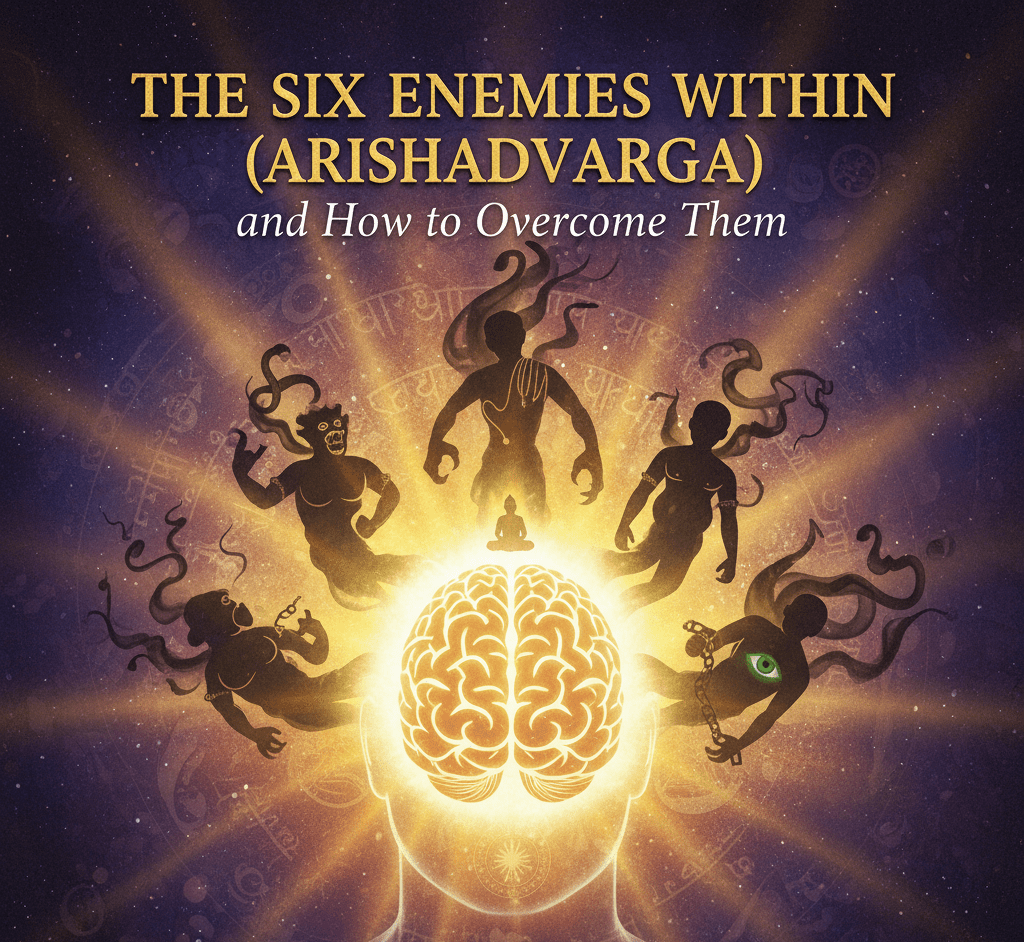
The Sanskrit-derived word Arishadvarga (अरिषड्वर्ग) breaks down into three components and refers to the “six enemies” of the mind that hinder spiritual progress in Hindu theology. Ari (अरि): Meaning “enemy,” “foe,” or “adversary.” Shad (षड्): Meaning “six.” Varga (वर्ग): Meaning “class,” “group,” or “collection.” Together, Arishadvarga means “the group of six enemies.” These six internal […]

Read More »

Lost Cities of Ancient Hindu Kingdoms: Dwarka, Hampi, Koh Ker & Luang Prabang

Lost cities of ancient Hindu kingdoms beckon like half-remembered dreams — sunken harbors, temple-topped hills and jungle-swallowed pyramids where myth and archaeology meet. Let’s step into that world: visiting Dwarka submerged stones, Hampi’s granite colossi, Koh Ker’s pyramidous Lingapura and Luang Prabang’s river-lit wats, and trace how living traditions keep these places alive. This article

Lost Cities of Ancient Hindu Kingdoms: Dwarka, Hampi, Koh Ker & Luang Prabang Read More »

Swami Vivekananda teachings: 10 Timeless Lessons for Modern Life

Swami Vivekananda (1863–1902) was an Indian spiritualist who emerged as one of the most influential spiritual leaders of the modern era. His teachings have had such a lasting impression that he still lives through his words to guide, inspire and calm millions around the globe. Born Narendranath Datta in Kolkata, India, he was the chief

Swami Vivekananda teachings: 10 Timeless Lessons for Modern Life Read More »

Striking Similarities Between Ancient Indian and Greek Cosmologies

From the lofty peaks of the Himalayas to the sun‑drenched shores of the Aegean, two great civilizations looked up at the same sky and saw patterns, cycles, and archetypes that resonate across cultures. Though separated by thousands of miles and different languages, ancient Indian and Greek thinkers developed cosmologies that share remarkable motifs: creation from

Striking Similarities Between Ancient Indian and Greek Cosmologies Read More »

Getting to Know Three East Asian Religions

East Asia is a region steeped in spiritual and philosophical traditions that have shaped its cultures, societies, and ways of life for thousands of years. Among these, Taoism, Shinto, and Confucianism stand out as three profoundly influential systems of thought and practice. Each offers a unique perspective on existence, from living in harmony with nature

Getting to Know Three East Asian Religions Read More »

Unseen forces that shape our lives

Subtle Energies: The Unseen Forces That Shape Our Lives – A Comprehensive Exploration Subtle Energies: The Unseen Forces That Shape Our Lives Table of Contents Introduction to Subtle Energies Historical Context Spiritual Insights into Subtle Energies Practical Applications Philosophical Aspects Sociological Aspects Psychological Aspects Debunking Myths and Addressing Skepticism New Frontiers in Subtle Energy Research

Unseen forces that shape our lives Read More »

Shoonyata

Shoonyata: The Profound Indian Concept of Emptiness The Enso circle: a Zen symbol representing emptiness and enlightenment Shoonyata (Śūnyatā in Sanskrit) is one of the most profound philosophical concepts to emerge from ancient India. Often translated as “emptiness” or “voidness,” it challenges ordinary perceptions of reality by inviting us to see beyond surface appearances. Rooted

Shoonyata Read More »

Good Manners and Etiquette: ‘Vedic Shishtachar’ in Vedic Times Vedic traditions in artistic expression Vedic Shishtachar is not just a historical term—it is a vibrant focus keyword that encapsulates the ancient principles of good manners and etiquette as practiced in the Vedic era. The rich heritage of India is deeply rooted in these traditions, where

Read More »